
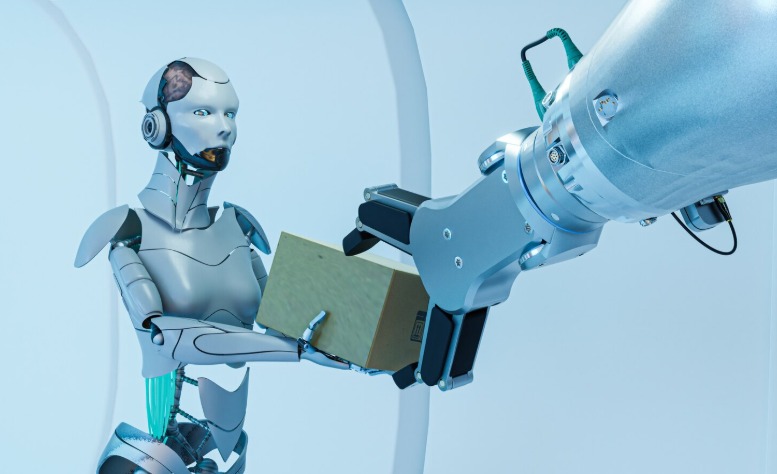
China Post has deployed 45 ROBOTERA humanoid robots at its Hangzhou Postal District Center as part of a large-scale trial of embodied AI for postal logistics that began in April 2026. The robots automate multiple stages of parcel induction, including picking packages, reorienting them, identifying irregularly shaped items, rejecting unsuitable parcels, and placing them on induction platforms. Throughput rose from an initial 500–600 parcels per hour to about 1,200 parcels per hour during specific testing periods, with operational accuracy exceeding 90 percent. Improvements were reported in motion smoothness, recognition accuracy, and handling precision after iterative optimization. The trial evaluates the robots’ ability to manage varied package shapes and operational exceptions in a live logistics environment. China Post’s Hangzhou branch plans to expand intelligent sorting and inspection systems across more operational scenarios.



China Post has deployed 45 ROBOTERA humanoid robots at its Hangzhou Postal District Center as part of a large-scale trial of embodied AI for postal logistics that began in April 2026. The robots automate multiple stages of parcel induction, including picking packages, reorienting them, identifying irregularly shaped items, rejecting unsuitable parcels, and placing them on induction platforms. Throughput rose from an initial 500–600 parcels per hour to about 1,200 parcels per hour during specific testing periods, with operational accuracy exceeding 90 percent. Improvements were reported in motion smoothness, recognition accuracy, and handling precision after iterative optimization. The trial evaluates the robots’ ability to manage varied package shapes and operational exceptions in a live logistics environment. China Post’s Hangzhou branch plans to expand intelligent sorting and inspection systems across more operational scenarios.