
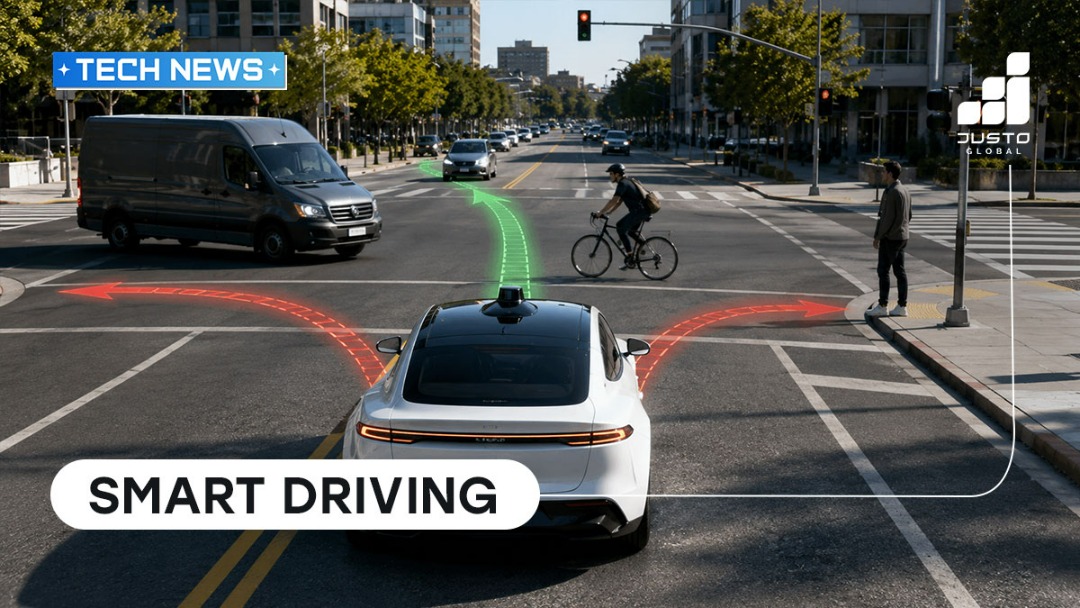
A team at Seoul National University created SafeDrive, a new AI model for autonomous vehicles. It uses fine-grained safety reasoning to evaluate multiple possible trajectories based on sensor data. The system scores options for safety and chooses the best path instead of reacting impulsively. This addresses weaknesses in traditional end-to-end models that mimic human driving but struggle with explainability in edge cases. SafeDrive was selected as a highlight paper at CVPR 2026. It is now part of EAD, a Korean reference model, and is being tested with local companies. The approach aims to make self-driving cars safer in unexpected situations where current systems sometimes behave erratically. Researchers plan further improvements with larger datasets for commercialization.



A team at Seoul National University created SafeDrive, a new AI model for autonomous vehicles. It uses fine-grained safety reasoning to evaluate multiple possible trajectories based on sensor data. The system scores options for safety and chooses the best path instead of reacting impulsively. This addresses weaknesses in traditional end-to-end models that mimic human driving but struggle with explainability in edge cases. SafeDrive was selected as a highlight paper at CVPR 2026. It is now part of EAD, a Korean reference model, and is being tested with local companies. The approach aims to make self-driving cars safer in unexpected situations where current systems sometimes behave erratically. Researchers plan further improvements with larger datasets for commercialization.