
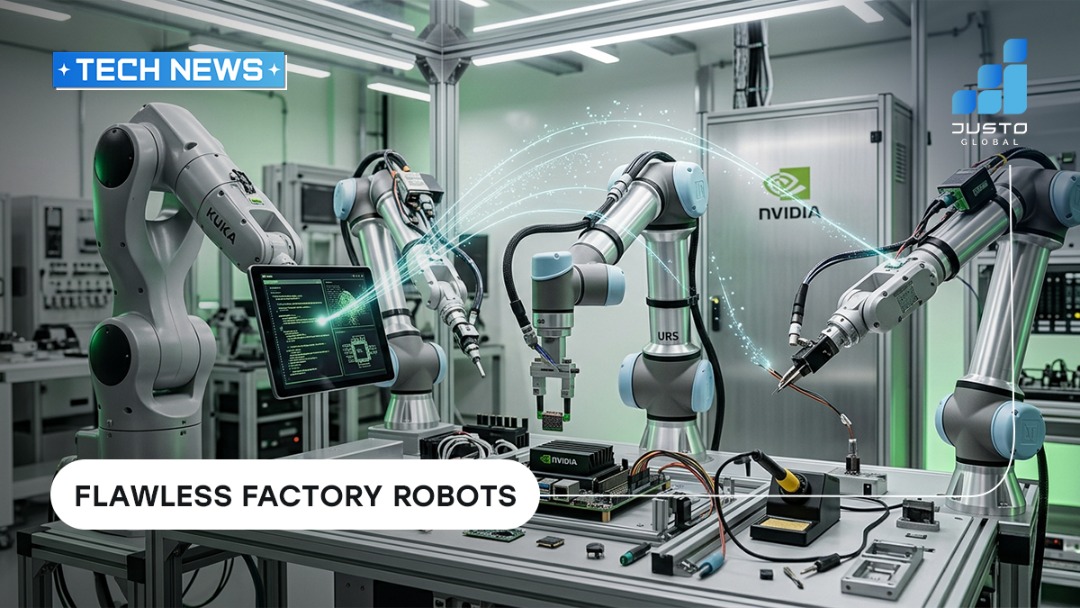
Nvidia researchers, in collaboration with Carnegie Mellon and UC Berkeley, have developed ENPIRE, a framework where AI coding agents autonomously train physical robot arms. A fleet of eight bimanual robots successfully learned complex tasks like pin insertion, seating graphics cards, and cutting zip ties with minimal human intervention. The system uses AI agents to search research, select training methods, generate code, test on hardware, and share improvements via Git. It achieved up to 99% success rates, significantly faster with multiple robots scaling learning. This demonstrates the viability of autoresearch in the physical world, bridging simulation-to-reality gaps and accelerating robotics development through agent-driven experimentation and fleet-wide knowledge sharing.



Nvidia researchers, in collaboration with Carnegie Mellon and UC Berkeley, have developed ENPIRE, a framework where AI coding agents autonomously train physical robot arms. A fleet of eight bimanual robots successfully learned complex tasks like pin insertion, seating graphics cards, and cutting zip ties with minimal human intervention. The system uses AI agents to search research, select training methods, generate code, test on hardware, and share improvements via Git. It achieved up to 99% success rates, significantly faster with multiple robots scaling learning. This demonstrates the viability of autoresearch in the physical world, bridging simulation-to-reality gaps and accelerating robotics development through agent-driven experimentation and fleet-wide knowledge sharing.